
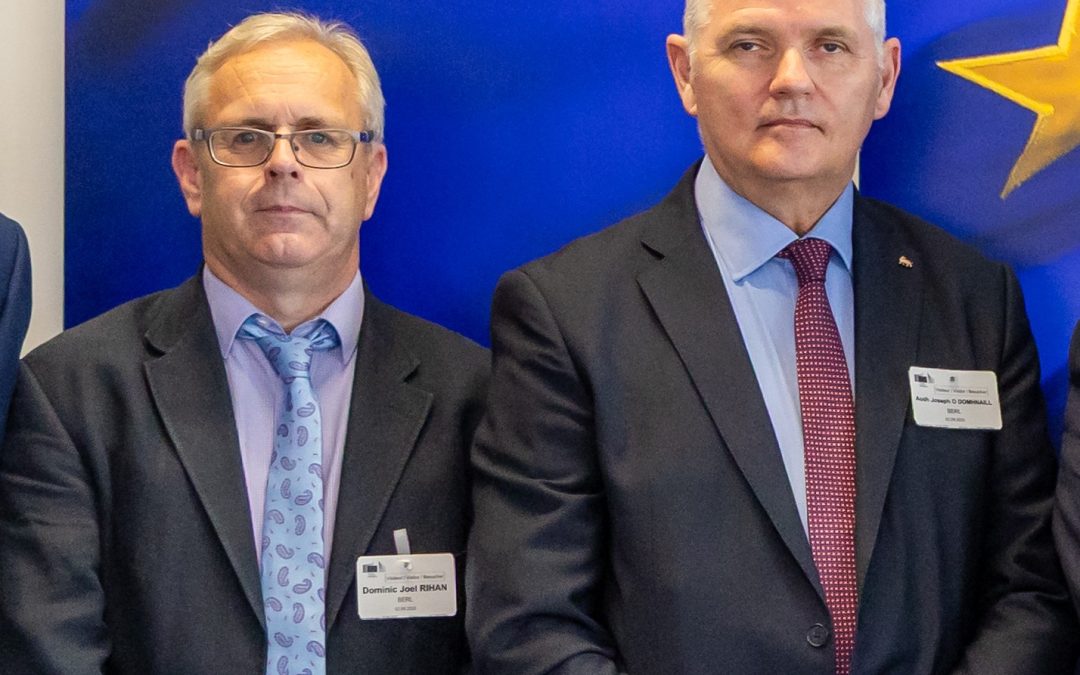
The Irish Fish Producers’ Organisation (IFPO) and the Killybegs Fishermen’s Organisation (KFO) have reacted with shock and outrage to the latest EU–Norway fisheries deal.
Norway stands to gain nearly €10 million more than the EU under the latest fisheries deal. Signed last week the agreement grants Norway access to Blue Whiting worth around €21.5 million, while the EU receives Atlanto-Scandian Herring (ASH) worth only €12 million in return.
The imbalance is staggering, says Aodh O’Donnell, CEO of the IFPO. “Even worse, the Blue Whiting will be taken from the waters off Ireland’s west coast and in Ireland’s Economic Zone (EEZ). Norway gains additional access to fish 50,000 tonnes of its total allowable catch in the Irish EEZ.”
“Yet Ireland will only receive less than 12% of the ASH quota amounting to 1,560 tonnes. Furthermore, it’s not economically viable for us to travel to Northern Norway to catch this small quota, which for individual vessels amounts to around 250 tonnes.”
Around 44% of this Atlanto-Scandian Herring opportunity will go to Denmark alone, over 16% to Sweden and just under 16% to the Netherlands. The remainder will be shared among other EU Member States.
Ireland gives up more. Ireland gets back less.
This is not a bad deal for Ireland – it is a disastrous one, says O Donnell. “We are giving away fish of far greater value from our own coastal waters and receiving a fraction of that value back.”
The IFPO and KFO are also deeply concerned that the Minister for the Marine abstained rather than opposed the EU vote for this deal.
“At a time when our fishing industry is under sustained pressure, abstention sends the wrong signal,” Mr O’Donnell said. We can understand the Minister’s focus on facilitating much needed foreign landings to Irish factories, but Norway has three times our total annual quota in these waters to the west of Ireland. This access deal was signed off by Europe at a crucial time when most of the Irish blue whiting fleet was tied up. This was a moment for Europe to stand up clearly and firmly for Ireland’s interests. That did not happen and they have once again failed Irish coastal communities.”
EU Rewards Norway for Overfishing
The fish producer organisations are also highly critical of the EU’s role in brokering this deal, which trades access to Norwegian waters for13,500 tonnes of ASH for Norwegian access 50,000 tonnes of blue whiting. Dominic Rihan, CEO of the KFO says Norway relies on access to the blue whiting fishery in our EEZ at this time of year.
“This is because the stock is in prime condition and generally, they can only catch less than 5% of their enormous blue whiting quota in their own waters. Worse still, they have been systematically overfishing mackerel – a shared stock Ireland relies on heavily – and putting the future of the stock at risk,” says Rihan. “The EU should be confronting that behaviour. Instead, they are rewarding it with access to valuable fish off Ireland’s coast.”
“A non-EU coastal state gains, while the Irish fishing industry is left with scraps. This is another example of Ireland being treated unfairly in EU fisheries negotiations,”
Coincidentally, Dominic Rihan, CEO of the KFO and Aodh O’Donnell are currently attending critical talks in Copenhagen on mackerel quota sharing arrangements. Rihan says it is “imperative that a comprehensive sharing agreement and level playing field is achieved for Ireland, and to finalise our quota for 2026.”
“Our coastal communities have already endured significant cuts and restructuring,” he said. “They cannot continue to absorb unequal arrangements that transfer wealth from Irish waters to others.”
The two organisations are calling for full transparency around how the agreement was negotiated and approved by the EU Commission. “We must face the fact that Ireland’s seafood sector and coastal communities are being disregarded at European level,” says Aodh O Donnell. “There’s a need for an urgent reassessment of Ireland’s position within future EU fisheries talks.”
“Ireland’s fishing industry deserves fair treatment, strong representation and sustainable management of stocks,” says O’Donnell. “This deal fails on all three counts.”